Money: where it comes from and where it goes
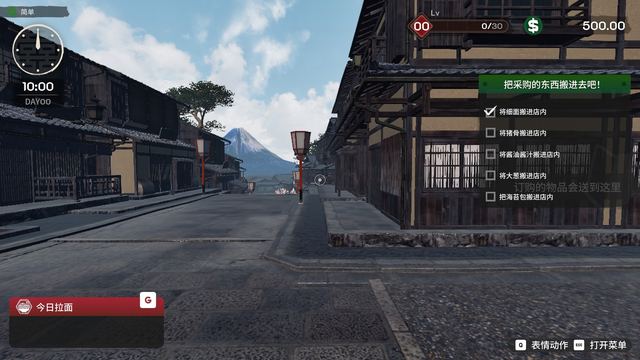
You open with about $500 and earn per served order. Keep restocks tight — egg cartons are limited to 6 per purchase — and remember the Day-1 patch pays boss-customer first clears in cash. Easy pays 1.4× and Normal 1.2× the old rates.
Money in Japanese Ramen Simulator flows in tiny increments and leaks in tiny increments — which is why shops that feel "busy" can still stall at level 12. Here is the actual shape of the economy in the launch build.
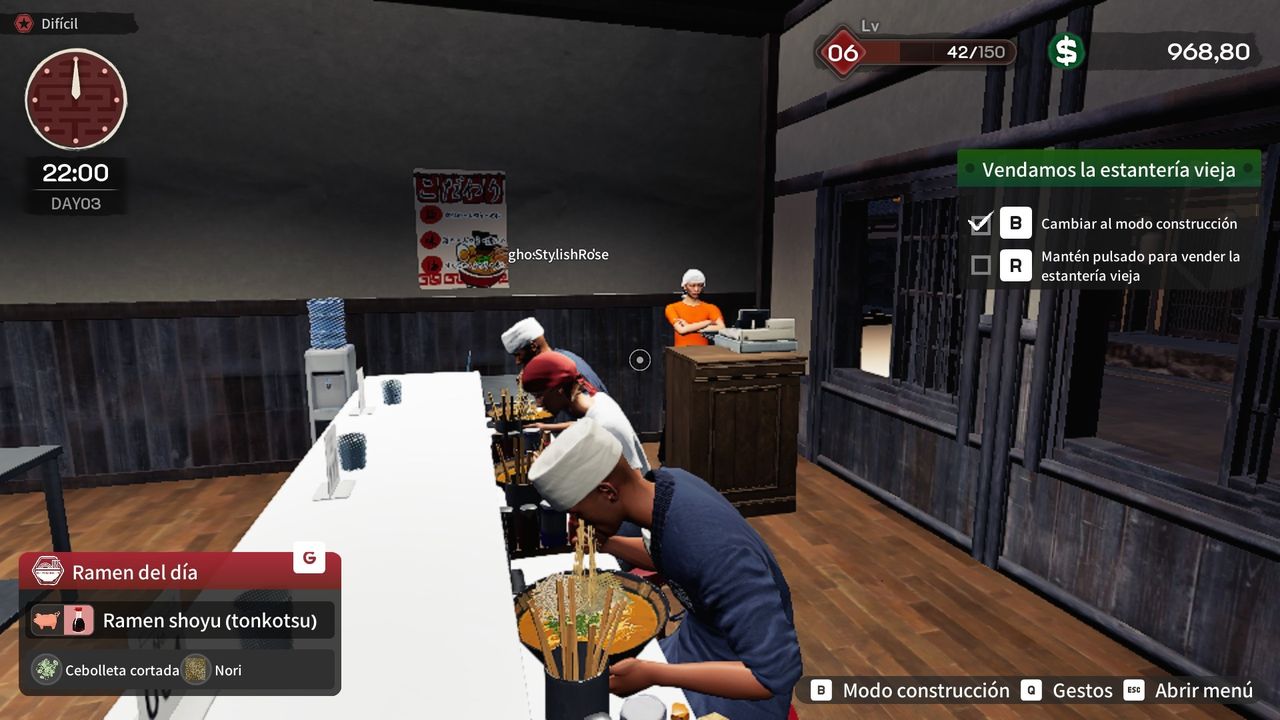
Screenshot: a player checking shop options at the in-game computer (game UI shown in Spanish — by Teterizo05 via Steam Community).
Where money comes from
- Served orders. Every bowl, gyoza plate and drink a customer pays for. Order value rises with menu complexity — more toppings, sides and drinks per ticket as your levels grow.
- Difficulty multipliers. The Day-1 patch raised customer payments by 40% on Easy and 20% on Normal (Hard and Very Hard unchanged). If you are learning the line, Easy is now genuinely rewarding rather than a "baby mode" — useful when you are practising before a solo evening run.
- Boss-customer first clears. Beating any of the four challenge customers now pays a one-time cash bonus on top of what they consume.
- The gambling hall. Yes, really: the store description promises you can "try your luck at the gambling hall and win a fortune." Treat it as a lottery ticket — fun when ahead, never plan around it.
Where money goes
| Category | What eats it | How to think about it |
|---|---|---|
| Restocks | Ingredients, noodles, tare, drinks | Perishables are the silent killer — order for tomorrow, not next week |
| Wages | Staff stations (register, cooking, dish clearing) | A running cost; each hire must pay for itself in covers per hour |
| Equipment | Stations, boilers, dishwasher, display | Throughput first, comfort second |
| Expansion & furniture | Layout, seating, storage, decor | Capacity costs the most and is optional until Lv.10+ |
A restock note from the Day-1 patch worth internalising: egg cartons are limited to 6 per purchase. If eggs are part of your standard bowl, that cap quietly sets your soup's ceiling per run — you can order more after completing that purchase, but a single stock-up will not carry a busy week.
The shift ledger
At the end of each business day the game shows the books: income, expenses and the day's rating. Two reading habits:
- A good day is a rising average ticket, not just more covers. Selling thirty bowls at minimum prices barely outearns a focused fifteen with sides and drinks.
- Watch the expense line for drift. Staff wages and big restocks should track your traffic. If expenses grow while covers are flat, you expanded one day too early.
The register is part of the economy
Money in the till is money on the floor — the game's thieves target an open cash register during business hours, and a solo cook mid-rush is exactly who they are waiting for. Close the drawer between customers; the Day-1 patch also lets you fight back by clicking a thief down, but prevention is cheaper than the fight. (See Boss customers and events for the full thief drill.)
Building toward the expensive tiers
The unlock ladder back-loads the catalogue: drinks at Lv.25, new ingredients at Lv.26, beef-broth variations at Lv.28. That is a lot of new spending arriving in a narrow band of levels. Park cash as you approach Lv.25 — the shops that stall at the twenties are the ones that spent it all on decor at Lv.12.
Money questions we see a lot
What do I start with? A few hundred dollars in the till — enough for a basic restock and one mistake. The first day's objective chain tops you up through normal service.
Should I raise prices? Pricing is menu-set, but the effect you are hunting is order mix: sides and drinks raise a ticket without raising workload nearly as much as an eleventh ramen variant.
Does difficulty pay more end-to-end? Easy now pays 1.4× the old rate — a deliberate policy to make practice runs finance themselves. When you switch to Hard for the challenge, you are choosing the harder service flow, not a better wage.