
Six-player co-op: setup, roles and connection fixes
Co-op is invite-based for up to six players — there is no public matchmaking. Split prep, cooking, serving, register and dish duty between players, and use the in-game voice chat. If a join times out, check firewall permission for Steam and retry the invitation code.
Six players, one tiny kitchen: online co-op is the headline feature, and like every kitchen it works best when everyone knows their station. Here is how to get a crew in, split the work, and un-stick a join.
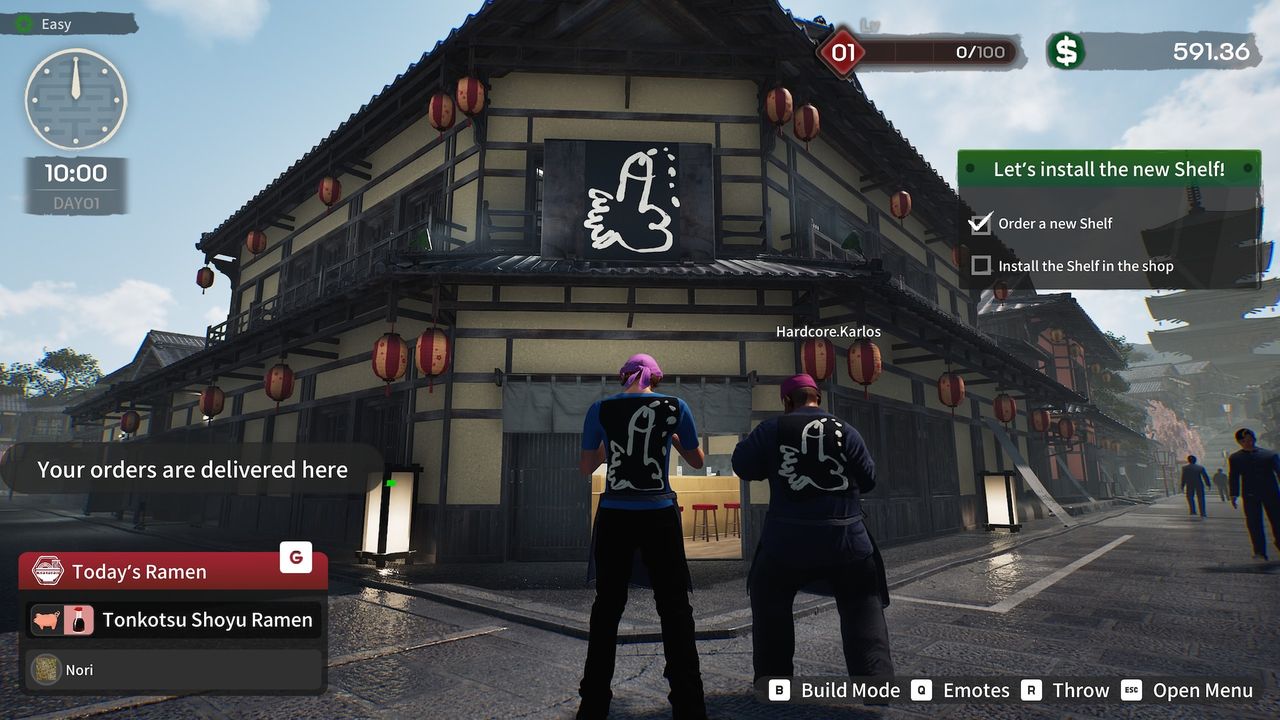
Screenshot: two players starting their shift — by Helena.Rose via Steam Community.
How co-op actually works
- Invite-based, up to six players. You host, friends join from Steam. There is no random public matchmaking lobby — this is the one multiplayer complaint that shows up repeatedly in the community, so plan co-op nights with people you know.
- Shared shop, shared till. One restaurant: same money, unlocks and storage for everyone.
- Spatial voice chat is built in. Voices are positional — distance and walls shape how teammates sound, so a shout across the kitchen really is one. Set mute and push-to-talk before the rush; the Day-1 build applies them on join.
- Solo is first-class. Hire NPC staff and run the same shop alone; the sim scales its demands.
The role split that works
Six bodies in one kitchen is chaos until you assign lanes. The division that survives a real dinner rush:
| Station | Job | Notes |
|---|---|---|
| Prep / toppings | Cutting, batching, refilling the rail | Front-load before opening |
| Noodle boiler | Baskets in, gauges watched, straight to the pass | Busiest station mid-rush |
| Assembly | Tare, broth, noodles, toppings, out the window | The quality gate |
| Floor / register | Seating, orders, payment, closing the drawer | Thief look-out duty |
| Dish & brawl duty | Sink, dishwasher, trash — plus thief/fire response | The Day-1 dish-clearing staff can cover part of this |
| Floating | Refills, keg swaps, restocks, relief | Wherever the queue points |
Three-player crews collapse this to cook, runner and support — barely, which is the fun.
Visiting a friend's shop
Characters persist across sessions — outfit, emotes, even your noodle-draining animation — and design-applied clothing lets a crew run matching uniforms. You can also visit a friend's shop and leave your autograph.
The connection-timeout checklist
The most common failure right now is a join that hangs and ends in a connection timeout; the error text points at VPN software and firewall permissions. If you and a friend are getting bounced:
- No VPN, both sides. The game is unusually sensitive to VPN layers. Everyone in the lobby should be off their tunnel.
- Allow the game through the firewall. Windows Firewall (or your security suite) needs to leave the game and Steam free to talk. The first time Windows pops its permission dialog, tick "Private networks".
- Restart both clients, then retry the invitation code. The Day-1 patch improved automatic searches when a room temporarily cannot be found from an invite code — retry rather than creating a fresh room each time.
- Host on the most stable connection. Cable beats Wi-Fi for the host every time.
- Update first. Joining an out-of-date build is a silent troublemaker; the Day-1 patch also fixed a case where mid-session joins stalled on item synchronisation.
- Still stuck? Post after checking that a solo session runs fine — splitting network issues from save issues is the fastest triage.
What the Day-1 update fixed for co-op
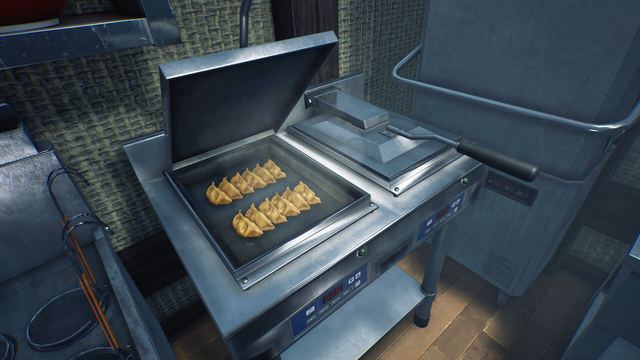
Worth knowing if your group bounced on day one: failures explain themselves now, joining no longer stalls on item sync, voice settings apply on join, and the beer dispenser, gyoza lid and dumbwaiter stay in sync. Retry on the current build.
The honest limits
- No public lobbies. You cannot drop into strangers' shops; scheduling is on you.
- Everything runs on one save's progression. A fresh friend joining a level-20 shop plays a level-20 shop from minute one — fine for fun, less fine if you want the early-game experience together.
- Voice chat handles throughput. In practice, a five-minute mic check before opening prevents most of the "why is the broth cold" arguments.
More guides12
 Basics
Your first shift: getting started in Japanese Ramen Simulator
 Progression
Shop levels and unlocks: the whole ladder
 Cooking
Cooking and menu: broth, noodles, toppings
 Money
MoneyMoney: where it comes from and where it goes
 Events
Boss customers, thieves and fires
 Completion