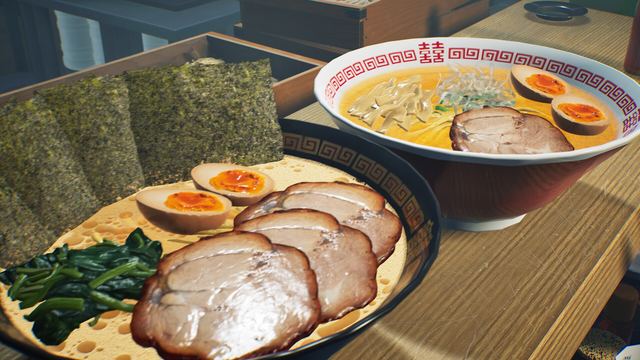
Your first shift: getting started in Japanese Ramen Simulator
Expect a guided first day: prep a broth, learn noodle timing, serve, manage the register, then close the shop. Start on Easy or Normal if you are running solo — the Day-1 patch raised Easy and Normal customer payments by 40% and 20%.
Your first day in Japanese Ramen Simulator is a guided one: the game walks you through ordering supplies, cooking a broth, boiling noodles, serving a bowl and closing up — and then it lets go of your hand and expects a shop. Here is the whole arc, so nothing on screen surprises you.
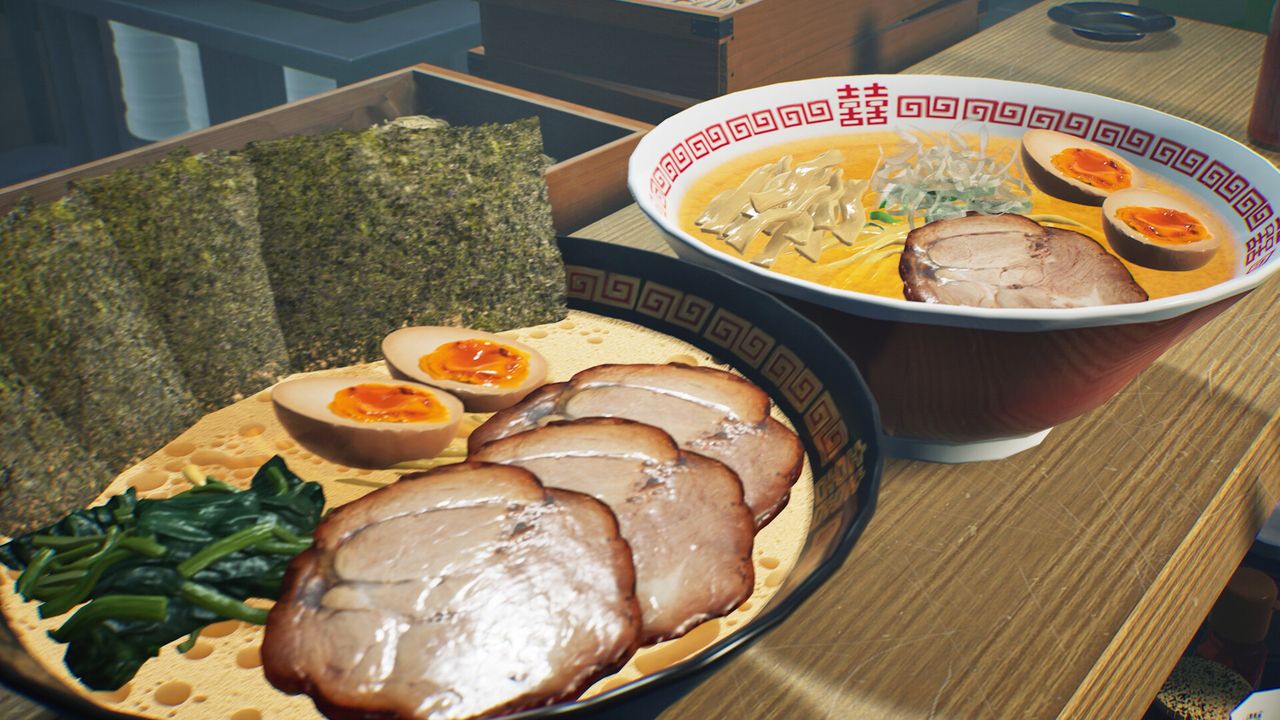
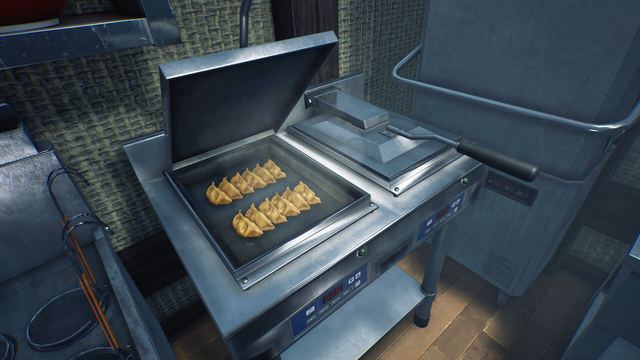
A served bowl close-up. Noodle firmness, broth temperature and toppings all feed the rating.
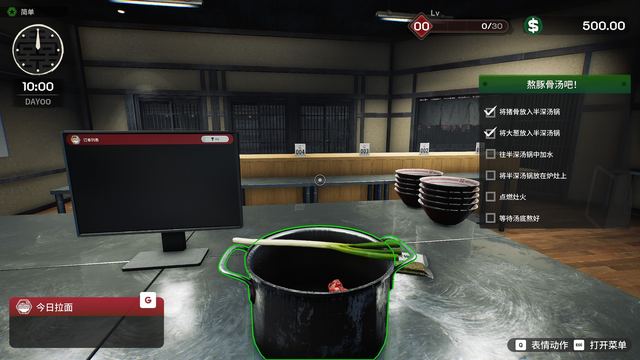
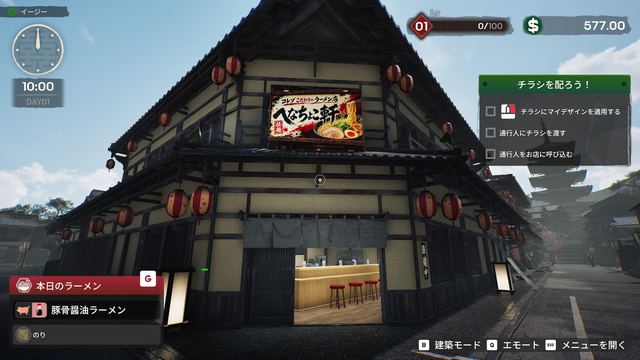
The HUD, decoded
The top bar carries everything that matters once service starts:
| Field | What it tells you |
|---|---|
| Difficulty | Which payment and pressure rules your save uses |
| Clock | In-game time — service runs on it |
| DAY | Which business day you are on |
| Lv + progress bar | Shop level and XP toward the next unlock |
| Cash | Your running balance, spent from the in-game computer |
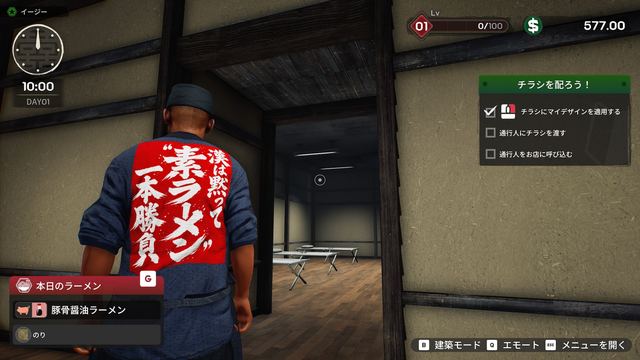
The left panel shows Today's Ramen — the recipe and topping set you are serving. Orders will ask for variations on it. An objectives checklist nudges you toward the next system (order a shelf, install it, and so on). Bottom-right prompts are contextual: B Build Mode, Q Emotes, R Throw, Esc Menu.
Setup choices that stick
The new-game screen asks three things: difficulty (Easy / Normal / Hard), time limit (Unlimited / Long / Normal) and customer count (Normal / High). For a solo first run, Easy or Normal with a generous time limit is the honest answer — the Day-1 patch raised Easy payments by 40% and Normal by 20% precisely because early service was too tight. Hard and Very Hard are for second shops.
The first-hour loop
- Order supplies from the computer. Thin noodles, your broth ingredients, tare bottles, bowls and toppings. Deliveries land at the delivery point marked on the floor.
- Start the broth first. It is the longest job in the kitchen. Get it heating while you work on everything else — running out mid-order is the classic day-one failure.
- Prep toppings while it cooks. Cut what needs cutting; the refrigerator keeps items overnight now even if you left the door open.
- Boil noodles to order. Drop a basket, watch the gauge, and drain at the firmness the ticket asks for — soft, normal or firm. "Firm" is the common default in orders.
- Assemble in order: tare, broth, noodles, then toppings. Serve while the soup is hot — soup temperature is part of scoring.
- Work the register. Take payment, close the drawer after each customer, and keep an eye out for opportunists.
- Clean as you go. Dirty dishes, trays and empty bottles stack up fast; the dishwasher handles loads, and the Day-1 dish-clearing staff exist so you can step away from the sink.
Noodle, broth and heat discipline
Noodle firmness is a per-order requirement, not a preference — changing baskets too early reads as a wrong bowl. Broth should never hit zero during service: keep a second pot working if you can, and top up before the rush. And watch pitcher-level items such as tare: the Day-1 update lets you carry five bottles at once, but only hold one when pouring into a bowl.
Closing the day
When you wind down service and close the shop, the day-end screen settles the books: expenses, income, and the XP you earned from serving, cleaning and objectives — plus how your day rated. Anything in the fridge and on the sample shelf stays put overnight. Tomorrow starts with a fresh checklist and, if you are leveling, new unlocks waiting in the computer.
If something feels wrong
- Broth ran dry mid-service — close the shop, refill, reopen; better to lose ten minutes than serve empty bowls.
- Cart handling feels stiff — it is a handcart, not a forklift; short taps on the throttle and take corners wide. The Day-1 patch retuned its acceleration and turning.
- A customer left angry — check the ticket again: most misses are firmness or a missing topping, not speed.